


Single Tooth Implant vs Dental Bridge: Which Lasts Longer?
Basics of implants — strong, natural tooth restoration with a metal post.
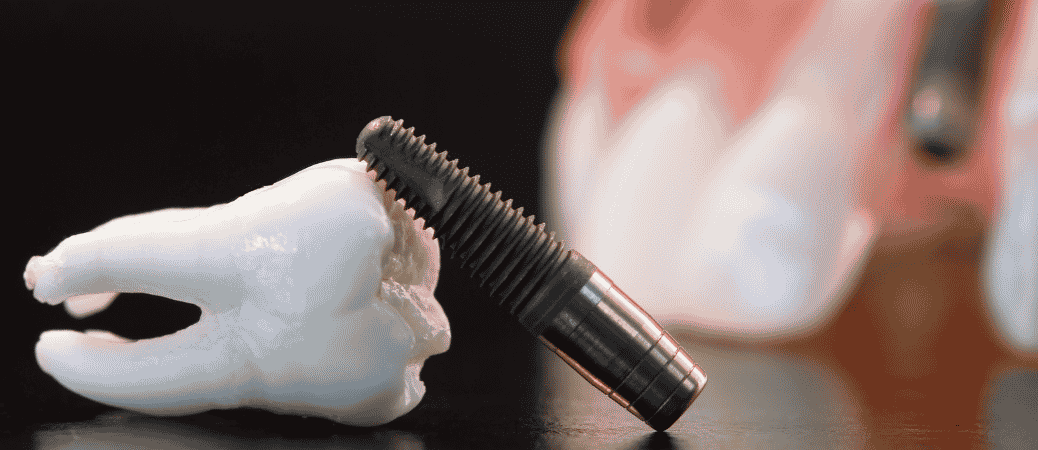
Losing a tooth forces a decision most people never expected to make: how do you replace it in a way that holds up for years, not just months?
When comparing single tooth implant vs bridge treatment, both options can fill the gap, restore your bite, and help you smile without worry.
They age very differently, though, and that difference shows up in your wallet, your gum health, and the condition of the teeth next to the gap.
A single tooth implant usually lasts the longest, often for decades, while a traditional dental bridge typically needs replacement every 10 to 15 years.
The implant post fuses with your jawbone and can outlast the crown on top of it.
A bridge relies on the two teeth beside the gap to carry the load, and those supporting teeth face extra wear that can shorten the bridge’s working life.
The right choice for you depends on your bone health, gum condition, budget, and how soon you need a finished smile.
At a practice like Arthur Greyf DDS, patients get a straightforward look at both paths before committing to either one, so the decision feels informed instead of rushed.
Key Takeaways
- A single tooth implant generally outlasts a dental bridge, though the crown and post may need attention on different schedules.
- A bridge costs less upfront but places extra strain on the teeth beside the gap, which can lead to future repairs.
- Bone health, gum condition, and daily cleaning habits shape how long either restoration actually holds up in your mouth.
Table of Content
- Expected Lifespan and What Can Fail
- How Each Restoration Replaces a Missing Tooth
- Protecting Bone, Gums, and Nearby Teeth
- Cost, Timeline, and Daily Care
- When Each Choice Makes Sense
- Choosing a Restoration That Fits Your Mouth
- Frequently Asked Questions
Expected Lifespan and What Can Fail
A single tooth implant tends to outlast a dental bridge by a wide margin, but each restoration fails in its own way.
Knowing what typically wears out first helps you set realistic expectations before you commit to either option.
How Long Does a Single Tooth Implant Last?
The titanium post inside a single tooth implant often stays functional for decades once it fuses with your jawbone.
Peer-reviewed studies put implant survival at roughly 95% at the 10-year mark in healthy patients.
Many implant posts stay in place well beyond that window.
The implant crown sitting on top is a separate story.
It handles daily bite forces and can chip, wear down, or loosen over the years, which means it may need replacing sooner than the post underneath it.
How Long Does a Dental Bridge Last?
Research shows that a traditional dental bridge typically lasts 10 to 15 years before it needs replacement, depending on materials and how well the supporting teeth hold up.
Bridge failure rarely starts with the fake tooth in the middle. Decay along the crown margins of the two anchor teeth is a leading cause of bridge replacement.
Why an Implant Crown and Implant Post Have Different Replacement Timelines
The implant post and the implant crown wear out at different rates because they do different jobs.
The post acts like a new tooth root, anchored in bone that rebuilds around it.
The crown takes the daily impact of chewing, grinding, and biting, so it wears the way any capped tooth would.
This split matters when you’re budgeting. You may pay once for the post and expect a crown replacement sometime later, a much smaller cost than starting over.
Bridges don’t offer that separation. When an abutment tooth fails, the entire bridge often needs to come out.
How Each Restoration Replaces a Missing Tooth
A single tooth implant replaces the missing root and the visible tooth as two connected pieces, while a bridge spans the gap by leaning on the teeth on either side.
Both restore your bite and appearance, but the mechanics behind them are entirely different.
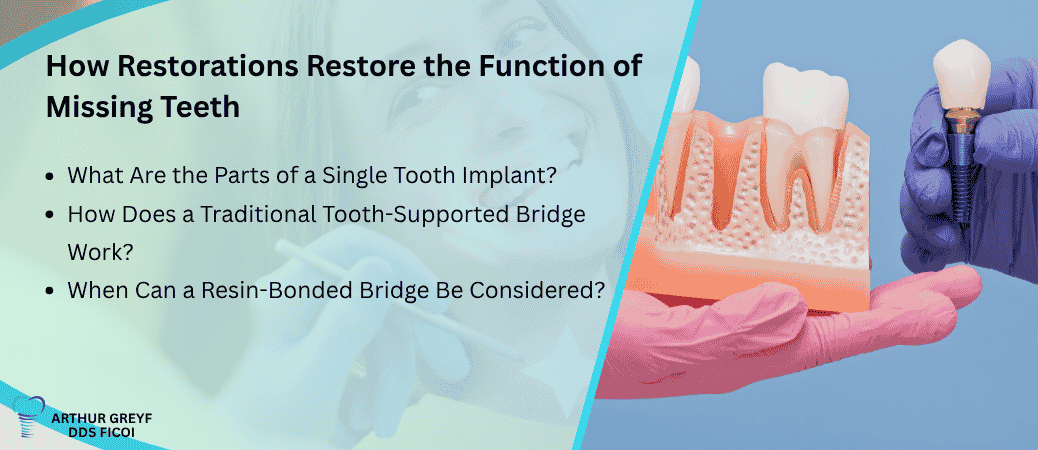
What Are the Parts of a Single Tooth Implant?
A single tooth dental implant has three main parts: the titanium post, the abutment, and the implant crown.
Implant placement involves setting the post into your jawbone during a short surgery, where it acts as an artificial tooth root.
Over the following months, a process called osseointegration lets the bone grow around the post and lock it in place.
Once that’s confirmed, your dentist attaches the abutment, a small connector piece, and secures the crown on top.
If you’re comparing your full range of choices, these three options for replacing missing teeth can help frame where implants fit against other solutions.
How Does a Traditional Tooth-Supported Bridge Work?
A traditional dental bridge fills the gap by capping the two teeth next to it and suspending a false tooth, called a pontic, between them.
This tooth-supported bridge, sometimes called a fixed bridge, relies on those abutment teeth (also called anchor teeth or supporting teeth) to hold everything steady.
Getting a bridge means shaving down enamel on the teeth beside the gap so crowns can fit over them.
That enamel never grows back, which is worth weighing carefully at your first consultation.
For a deeper look at how implants compare to other permanent options, see this guide on permanent tooth replacement services.
When Can a Resin-Bonded Bridge Be Considered?
A resin-bonded bridge works well for patients whose neighboring teeth are healthy and don’t need full crowns.
Instead of capping the abutment teeth, this design uses a metal or ceramic wing bonded to the back of the neighboring teeth, which preserves more of the natural tooth structure.
It’s a more conservative option, though it may not hold up as well under heavy bite forces in the back of the mouth.
Your dentist can tell you whether your bite pattern and the location of your gap make you a good candidate.
Protecting Bone, Gums, and Nearby Teeth
An implant supports jawbone health the way a natural tooth root does, while a bridge leaves the bone under the gap without stimulation.
Both restorations interact with your gum tissue and neighboring teeth in ways worth understanding before you choose.
Do Implants Preserve Jawbone Health Better Than Bridges?
Yes, a single tooth implant preserves jawbone density because the titanium post transmits chewing force directly into the bone, keeping it stimulated.
Alveolar ridge resorption, the technical term for bone shrinking after tooth loss, begins within months of losing a tooth if nothing replaces the root.
A bridge sits above the gum line and doesn’t touch the bone underneath.
Chewing feels normal on the surface, but the bone below the gap can keep resorbing for years, sometimes changing the shape of your jaw and face over a decade or two.
What Happens to Healthy Adjacent Teeth With a Bridge?
Preparing a bridge means permanently removing enamel from the adjacent teeth on either side of the gap.
This step can’t be reversed, and it puts extra bite force on teeth that may have been perfectly healthy before treatment started.
Those neighboring teeth also become more vulnerable to decay along the crown edges, one of the most common reasons bridges eventually fail.
An implant avoids this entirely since it stands on its own without touching the surrounding teeth.
If you’d like to understand more about protecting the teeth around a gap, this piece on why you ought to replace a missing back tooth covers related ground.
How Gum Health and Bite Forces Affect Long-Term Success
Healthy gums and a stable bite are what make either restoration hold up over time.
Gum disease around an implant, sometimes called peri-implantitis, can loosen the post the same way gum disease damages a natural tooth’s support.
Uneven bite forces stress bridges and implants differently: a bridge transfers extra pressure to the anchor teeth, while an implant crown absorbs it directly.
Keeping up with cleanings and monitoring gum recession around either restoration helps catch problems early, before bone loss sets in.
Cost, Timeline, and Daily Care
A dental bridge usually costs less upfront than an implant, but the full financial picture depends on how long each restoration lasts and what extra procedures you might need.
Timeline and daily cleaning habits matter just as much as the initial price tag.
How Much Does an Implant vs. Bridge Cost?
A single tooth implant usually has a higher upfront cost than a dental bridge because treatment includes implant placement, an abutment, and a crown.
A bridge may cost less initially, but future replacement or treatment of the supporting teeth can affect the long-term cost.
Your out-of-pocket cost depends on the treatment you need and your individual benefits.
Before choosing an implant or bridge, review the treatment estimate and available financial options so you understand the expected cost.
| Factor | Single Tooth Implant | Dental Bridge |
| Typical lifespan | 20+ years, often decades | 10 to 15 years |
| Upfront cost | Usually higher | Usually lower |
| Affects neighboring teeth | No | Yes, requires removing some enamel |
| Preserves jawbone | Helps maintain bone stimulation | Does not replace the missing tooth root |
| Treatment timeline | Often several months | Usually shorter than implant treatment |
Why Bone Grafting and a Sinus Lift Can Change Implant Cost
Bone grafting or a sinus lift adds cost and time when your jawbone doesn’t have enough volume to support an implant post.
Your dentist checks this using CBCT imaging, a 3D scan that shows bone density and height in detail before any surgery is planned.
If bone volume is low, grafting may rebuild the area first and add several months to the treatment timeline.
Your dentist can explain whether grafting is necessary based on your imaging and treatment plan.
How Do You Clean an Implant or Bridge?
Cleaning under a bridge’s pontic requires tools that reach beneath the false tooth, since floss can’t get through on its own.
A floss threader, interdental brushes, or a water flosser all help clear food and plaque from that hard-to-reach space.
An implant crown gets cleaned much like a natural tooth, with regular brushing and flossing around the gum line.
Skipping this step around either restoration raises the risk of gum disease, which can undermine an otherwise well-placed implant or bridge.
When Each Choice Makes Sense
A single tooth implant tends to fit patients with healthy bone and gums who want a long-term, standalone solution, while a bridge often suits patients who need a faster fix or already have compromised neighboring teeth.
Neither option is automatically the better fit for everyone.
When Is a Single Tooth Implant Usually the Better Fit?
An implant is usually the stronger choice when the teeth beside the gap are healthy and you’d rather not touch them.
It also fits well when you have solid jawbone density and want to avoid decades of repeat dental work.
Patients who plan to keep their natural teeth long-term often prefer the implant route because it leaves those teeth untouched.
When Might a Bridge Be the Smarter Choice?
A bridge often makes more sense when the adjacent teeth already need crowns for other reasons, since using them as anchors becomes efficient rather than wasteful.
It’s also a reasonable choice when bone volume is too low for an implant and you’d rather skip grafting, or when a medical condition such as uncontrolled diabetes complicates healing after implant surgery.
Timelines matter too. A bridge can be finished in a couple of weeks, while an implant often takes three to six months from placement to final crown.
When Should You Get a Detailed Tooth Replacement Evaluation?
A detailed evaluation is especially important when you have significant bone loss, gum disease, problems with the teeth beside the gap, or several possible tooth replacement options.
Your dentist can assess your bone volume, gum health, neighboring teeth, and bite before recommending an implant or bridge.
At Arthur Greyf DDS, your evaluation can help determine which tooth replacement approach fits your oral health and treatment needs.
Choosing a Restoration That Fits Your Mouth
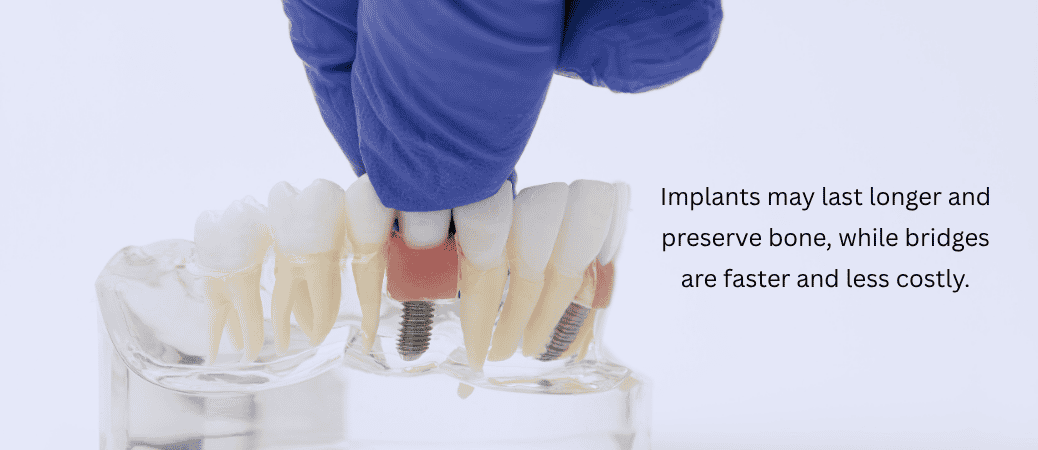
A single tooth implant and a dental bridge both do their job well when matched to the right patient.
The implant tends to last longer and protects jawbone health and the teeth beside the gap, while a bridge offers a faster, lower-cost path that still works well for the right candidate.
Your own gum health, bone density, and daily habits shape how either restoration performs over time.
A clear-eyed conversation about implant vs bridge tradeoffs, backed by imaging and an exam, gives you a much better answer than general lifespan numbers alone.
Frequently Asked Questions
Which lasts longer, a bridge or a single tooth implant?
A single tooth implant generally lasts longer than a dental bridge.
Implants often function for 20 years or more, with some posts lasting decades, while bridges typically need replacement every 10 to 15 years.
Can a dental bridge last 40 years?
It’s uncommon, though not impossible with excellent home care and stable anchor teeth.
Most bridges show wear or decay around the supporting teeth well before the 40-year mark, which is why 10 to 15 years is the more typical expectation.
Why would a dentist recommend a bridge instead of an implant?
A dentist may recommend a bridge when the teeth beside the gap already need crowns, when jawbone volume is too low for an implant without grafting, or when a faster treatment timeline matters more than long-term durability.
Certain health conditions that complicate healing can also make a bridge the more practical choice.
Is an implant or bridge better when the teeth beside the gap are healthy?
An implant is usually better in this situation, since it avoids shaving down healthy tooth structure on the neighboring teeth.
A bridge would require preparing those teeth for crowns, which permanently changes them even if they were problem-free before treatment.
Which option costs more over time, an implant or a bridge?
An implant generally has a higher upfront cost, while a bridge may need replacement sooner and can require future treatment if the supporting teeth develop problems.
Your total cost depends on your oral health, treatment needs, and how long the restoration lasts.
Can a bridge be replaced with a dental implant later?
Often, yes, though it can get more complicated the longer you wait.
Bone under the missing tooth tends to shrink while a bridge is in place, so switching to an implant years later may require bone grafting first.