


What Happens If You Wait Too Long to Replace a Missing Back Tooth?
Basics of implants — strong, natural tooth restoration with a metal post.

Losing a back tooth can feel like no big deal. No one sees it when you smile, and you can still chew on the other side. So it’s easy to put off missing back tooth replacement.
But when you wait too long to replace a missing molar, your jawbone starts to shrink where the tooth root used to be, and your other teeth begin to drift, tilt, or rotate into the gap, which can change your bite over time.
Those changes often start within a few months, even though you may not notice them right away.
The good news is that it’s rarely too late to fix things.
Below, you’ll learn what really happens after tooth loss, how it affects your chewing, gums, and overall oral health, and which options for replacing missing teeth may still work if you’ve already waited a while.
Key Takeaways
- A missing back tooth affects your jawbone, bite, and chewing, not just your appearance.
- Nearby teeth can shift into the empty space and create alignment and gum problems.
- Implants, bridges, and partial dentures are still options after a delay, though bone grafting may be needed first.
Table of Content
- Why a Missing Back Tooth Needs Timely Attention
- Changes in the Jawbone and Facial Support
- Teeth Shifting and Bite Problems
- Effects on Chewing, Gum Health, and Speech
- Tooth Replacement Options After a Delay
- Planning Your Next Step With a Dentist in Millburn, NJ
- Frequently Asked Questions
Why a Missing Back Tooth Needs Timely Attention
A gap in the back of your mouth may feel harmless, but your jawbone starts changing within months and your remaining teeth take on extra work.
Both problems get harder to fix the longer you wait.
Why a Pain-Free Gap Can Still Cause Problems
No pain doesn’t mean no damage. Once the root is gone, the bone that held it stops getting pressure from chewing and begins to shrink.
Research shows that up to 25% of bone width can disappear in the first year after an extraction.
At the same time, the teeth next to the gap tilt toward the empty space. The tooth above or below it slowly grows down or up into the opening.
These shifts create tight, awkward spots that floss and a toothbrush can’t reach well.
That means more plaque, more cavities, and a higher risk of gum disease around teeth that were perfectly healthy before.
None of this hurts at first. That’s exactly why so many people put off tooth replacement until the problem is bigger.
How Back Teeth Support Daily Chewing
Your molars and premolars do most of the grinding work. They handle tough foods like steak, raw vegetables, nuts, and crusty bread.
Lose one, and that job shifts to the teeth still standing. Over time, those teeth wear down faster and face a greater chance of cracking or fracturing.
Here’s what often changes in daily life:
- Chewing on one side only strains the jaw joint on that side
- Difficulty chewing firm foods leads to switching to softer, less nutritious meals
- Slower eating and more effort to break food down before swallowing
Poorly chewed food can also make digestion less comfortable. Replacing the tooth restores balanced chewing function and takes the extra load off your other teeth.
Changes in the Jawbone and Facial Support
Your back teeth do more than chew food. Their roots press into the jaw with every bite, and that pressure keeps the bone underneath thick and healthy.
When a molar is gone and nothing replaces it, that bone starts to change shape, and those changes can spread to your treatment options and even the look of your face.
Bone Resorption After Tooth Extraction
The jawbone you keep depends on being used. Once a tooth root is gone, the bone in that spot stops getting stimulation and slowly breaks down.
Dentists call this bone resorption.
It starts sooner than most people expect. Bone loss begins almost right away after a tooth is lost, even though you won’t feel it happening.
The first year is usually the fastest. The extraction sites often show the ridge losing much of its width in the first 6 to 12 months, and noticeable jawbone shrinkage in that same window is common.
After that, the loss slows down but doesn’t fully stop. Height and width both shrink, so the ridge where your molar sat becomes flatter and narrower over time.
How Jawbone Loss Can Affect Future Care
Less bone means fewer easy choices later. A dental implant needs enough height and width to hold the post securely, so thinner bone often means adding a bone graft first.
That extra step adds time and money. One estimate puts grafting at $500 to $3,000 with four to twelve weeks of healing before the implant can even go in.
Upper back teeth bring another wrinkle. The sinus sits right above them, and when the ridge shrinks, you may need a sinus lift to make room.
Here’s a quick look at how timing changes things:
| When You Act | What Treatment Often Looks Like |
| Within a few months | Implant placed in existing bone, fewer added steps |
| 1 year or more | Grafting may be needed, longer overall timeline |
| Several years | Graft plus possible sinus lift, higher cost |
Facial Changes From Ongoing Bone Loss
Your bone doesn’t just hold teeth. It also supports your cheeks and lips from underneath.
When several back teeth are missing and the ridge shrinks, that support fades.
The lower third of your face can look shorter, cheeks may look hollow, and lips can lose fullness.
These shifts are gradual. Many people don’t connect changes in facial structure to bone loss until years have gone by, since a smile can still hide the gap in back.
You’ll usually notice it most from the side. The jawline softens, folds around the mouth get deeper, and some sagging shows up along the cheeks.
Replacing the tooth early keeps pressure on the bone and helps hold that support in place.
Teeth Shifting and Bite Problems
Your teeth stay in place partly because they lean on each other.
When a back tooth is gone, that support disappears, and the teeth around the gap slowly move in ways that change how your bite fits together.
How Neighboring and Opposing Teeth Move
The teeth next to the empty space start tipping toward the gap. This drift is slow, so you probably won’t notice it day to day.
The tooth above or below the space also moves.
Without a partner to bite against, it slowly grows down (or up) into the open area. Dentists call this super-eruption.
Here’s what that chain reaction can look like over time:
- Molars tilt sideways instead of standing straight
- New gaps open up where teeth used to touch
- Crowding shows up in spots that were once even
- Roots become harder to clean around, raising decay risk
Even a missing molar that nobody sees can still cause teeth to shift and change your bite.
Uneven Wear and Bite Alignment Changes
When teeth tilt, your bite no longer meets evenly. Some teeth take on more chewing force than they were built to handle.
That extra pressure shows up as flattened enamel, chips, small cracks, and new sensitivity to hot or cold.
You may also start chewing on one side without thinking about it, which speeds up wear on that side.
The tricky part is that fixing things later gets more involved.
Once shifting teeth create misalignment across your mouth, you may need orthodontic treatment to move teeth back before a bridge or implant can even fit.
Waiting also tends to mean more complex and costly care down the road.
Jaw Discomfort and TMJ Symptoms
Your jaw joints work best when both sides share the load. A lopsided bite forces the muscles and joints to work harder on one side.
Over months or years, that can lead to jaw soreness, clicking or popping sounds, and tightness when you open wide.
Some people get headaches near the temples or wake up with a tired jaw.
These symptoms are easy to blame on stress, so many patients don’t connect them to a gap in the back of the mouth.
But jaw soreness and clicking are common in people who have gone years without replacing a tooth.
If you’re noticing jaw discomfort along with a missing molar, it’s worth mentioning both to your dentist at the same visit.
Effects on Chewing, Gum Health, and Speech
A missing back tooth changes how you break down food, how easily plaque builds up in that area, and sometimes even how certain words sound.
These changes tend to build slowly, which is why many people don’t notice them until chewing feels harder or their gums start to bleed.
Difficulty Chewing and Overloading Remaining Teeth
Your molars and premolars do most of the grinding work. Lose one, and the rest of your teeth have to pick up the slack.
That extra pressure adds up. You may start chewing mostly on one side, which can lead to sore jaw muscles, worn enamel, and cracked teeth.
Many people also change what they eat. Tough meats, raw vegetables, and crunchy foods get skipped in favor of softer options, which can affect your nutrition over time.
Missing teeth are linked to bite issues and shifting teeth, and a weaker bite makes it harder to chew comfortably.
Some people notice food feels like it needs more effort to swallow because it isn’t broken down as well.
Food Traps, Tooth Decay, and Gum Disease
An empty socket and the gaps left by shifting teeth make excellent hiding spots for food. Bread, meat fibers, and seeds pack into these spaces and stay there.
Your toothbrush can’t always reach them. Floss slides through wider gaps without scraping the tooth surface, so plaque stays behind.
That plaque hardens into tartar and irritates your gums. Over time this can lead to bleeding, swelling, and gum recession.
The teeth next to the gap are most at risk. Their exposed side surfaces have thinner enamel protection, so tooth decay and gum disease often show up there first.
Watch for these warning signs:
- Food that constantly gets stuck in the same spot
- Gums that bleed when you brush or floss
- Bad breath that doesn’t go away
- Sensitivity on the teeth beside the gap
When a Back Tooth Can Affect Speech
Front teeth get most of the credit for clear speech, but back teeth play a role too.
Your tongue presses against your molars and the roof of your mouth to form sounds like s, sh, ch, and j.
When a molar is gone, your tongue may drift into the open space. That can create a slight lisp or a whistling sound you didn’t have before.
Air escaping through the gap changes how words come out.
If several back teeth are missing, speech changes become more noticeable because your tongue has fewer surfaces to work with.
The good news is that most speech problems tied to missing teeth improve once the gap is filled and your tongue relearns its normal position.
Tooth Replacement Options After a Delay
Waiting a few years to fill the gap doesn’t take your choices off the table.
You may just need an extra step or two, like rebuilding bone, before a permanent replacement goes in.
Dental Implants and Implant Placement
A dental implant is still the closest match to a natural back tooth.
A titanium or zirconia post goes into your jawbone, and a crown attaches on top once the area heals.
Implant placement usually happens in stages. The post needs about three to six months to fuse with the bone before the crown is attached.
This stability is one reason many patients consider dental implants for tooth replacement.
An immediate implant, placed the same day a tooth is pulled, is only an option when the bone and gums are healthy enough.
If your tooth has been gone for years, your dentist will plan a delayed approach instead.
The good news: you can often get an implant years after a tooth was pulled, as long as there’s enough bone to support it.
Arthur Greyf, DDS, FICOI, can help you explore implant services based on your bone health, tooth loss, and treatment needs.
When Bone Grafting or a Sinus Lift May Be Needed
Your jaw shrinks where a tooth root used to be. If too much width or height is gone, you may need a bone graft first before an implant can be placed.
A bone graft adds material to the site so the implant has something solid to hold onto. Healing usually takes four to six months.
Upper back teeth sit close to the sinus cavity. When the bone there is too thin, a sinus lift raises the sinus membrane and packs graft material underneath.
These steps add time and cost, but they often make implant treatment possible when it otherwise wouldn’t be.
Dental Bridges and Removable Partial Dentures
Not everyone wants surgery, and that’s okay. A dental bridge fills the gap by anchoring a false tooth to crowns on the two neighboring teeth.
Bridges work well, but there’s a trade-off. Your dentist has to file down healthy enamel on those support teeth, and the bridge doesn’t stimulate the bone underneath.
Removable partial dentures clip onto your remaining teeth and lift out for cleaning. They cost less upfront and don’t require surgery.
| Option | Surgery needed? | Slows bone loss? | Typical lifespan |
| Bridge | No | No | 10–15 years |
| Partial denture | No | No | 5–8 years |
| Implant | Yes | Yes | 20+ years |
Both bridges and dentures restore chewing function without stopping the jawbone from shrinking.
Implant-Supported Dentures for Multiple Missing Teeth
If you’ve lost several back teeth on the same side, replacing each one separately gets expensive. Implant-supported dentures give you another path.
With this approach, a few implants act as anchors for a bridge or denture that covers the whole area.
You get a stable bite without needing an implant for every single tooth.
These restorations snap or screw onto the posts, so they don’t slide around while you eat. Some versions come out for cleaning, and others stay fixed in place.
Your dentist will look at your bone volume and bite before recommending one.
Early evaluation keeps more of these options open and can reduce how much grafting you need.
Planning Your Next Step With a Dentist in Millburn, NJ
A good plan starts with an exam that looks at your bite, your jawbone, and the teeth next to the gap.
From there, your timeline, bone health, and financial options help shape which tooth replacement makes the most sense.
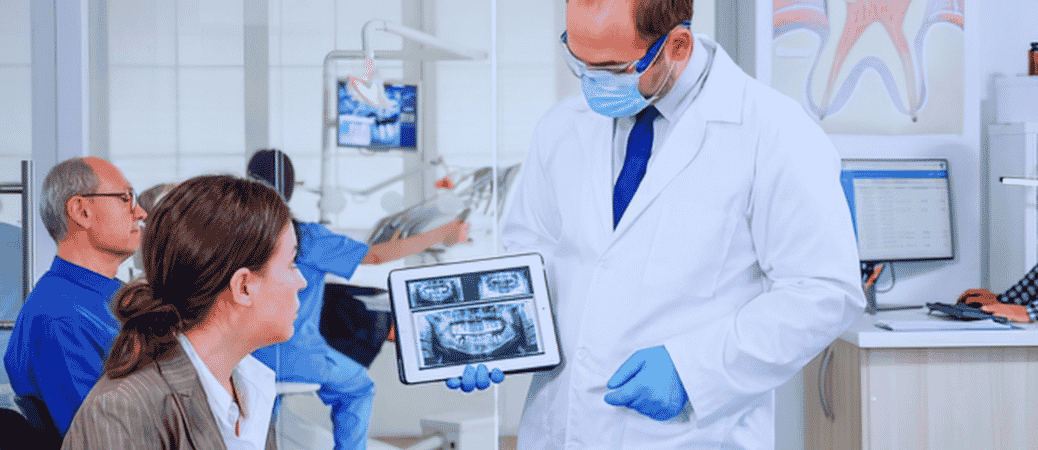
What a Missing-Tooth Evaluation Includes
Your first visit is mostly information gathering. Expect it to be pretty relaxed.
Here’s what a dentist in Millburn, NJ, usually checks:
- X-rays or a 3D scan to measure bone height and width where the back tooth used to be
- Bite check to see if the opposite tooth has drifted down into the empty space
- Gum health, since implants need healthy tissue around them
- Neighboring teeth, to see if they have fillings or crowns that might change your options
You’ll also talk about your goals. A prosthodontist who focuses on replacing missing teeth can tell you whether an implant, bridge, or partial denture fits your mouth best.
Some back teeth, like wisdom teeth, may not need replacing at all.
How Timing, Bone Health, and Dental Insurance Affect Your Plan
Waiting changes the math. Your jawbone needs pressure from a tooth root to hold its density, so the longer the space sits empty, the more bone you can lose.
That doesn’t mean you missed your chance. In most cases, it’s not too late for dental implants, though you may need a bone graft first, which adds months and cost to implant treatment.
Treatment costs can also vary depending on whether you need additional procedures before replacing the tooth.
Reviewing the available financial options can help you plan for care and understand your payment choices.
Ask your dental office for a written treatment estimate before you start.
Comparing bridges, dentures, and implants side by side can also make the choice clearer.
Frequently Asked Questions
Missing a back tooth brings up a lot of questions about timing, cost, and what happens to your jaw.
Here are clear answers about bone loss, shifting teeth, chewing changes, and the choices you have while you plan treatment.
How long can you safely go without replacing a missing back tooth?
Most dentists suggest replacing the tooth within three to six months.
That window matters because bone loss can begin within three to six months after the tooth comes out, and the fastest changes happen early.
You will not feel the bone shrinking, which is why people wait. A quick exam and X-ray can show what is going on under your gums.
What problems can happen if you do not replace a missing molar?
Molars do most of your chewing, so losing one changes how your whole mouth works.
Leaving the gap alone can cause bone loss, shifting teeth, and gum deterioration over time.
Other common issues include:
- Food packing into the empty space
- Extra wear on the teeth that pick up the workload
- Jaw soreness from chewing on one side
- Higher risk of gum disease around tilted teeth
Can nearby teeth shift if a back tooth is missing for too long?
Yes, and it can start within a few months. Teeth next to the gap tilt toward the space, while the tooth in the opposite jaw slowly drifts down or up because nothing is meeting it.
That drift changes how your teeth fit together. An untreated gap can lead to bone loss, shifting teeth, and bite problems that need braces or aligners to fix later.
Will a missing back tooth affect chewing or jawbone health?
Both, unfortunately. You lose some chewing surface right away, and your jaw stops getting the pressure it needs in that spot.
Without that pressure, the ridge of bone narrows and gets shorter.
Waiting also affects your bite, jawbone, speech, and surrounding teeth, so early treatment tends to keep things simpler.
Is it harder to get a dental implant after waiting several years?
It can be, but it is rarely too late. If the ridge has thinned out, you may need a bone graft before an implant can be placed, and that adds several months of healing.
Upper back teeth sometimes need a sinus lift too. The main tradeoff is time and cost, since treatment becomes more involved and expensive the longer you put it off.
What temporary options can cover a missing back tooth while you wait for treatment?
A removable partial denture is the most common short-term fix. It clips onto nearby teeth, restores some chewing, and comes out for cleaning.
Your dentist may also suggest a temporary flipper or a night guard if you grind.
None of these stop bone loss, though, so treat them as a bridge to a longer-term plan rather than the final answer.