


Missing Teeth
Basics of implants — strong, natural tooth restoration with a metal post.
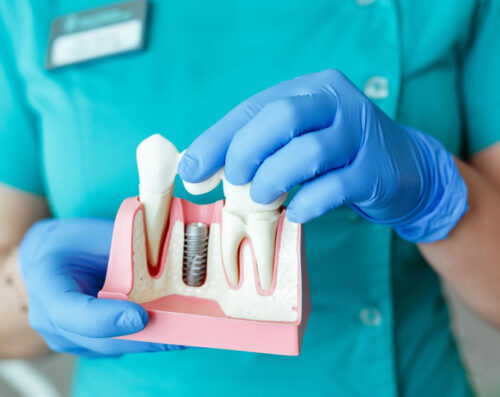
Dental veneers can’t replace missing teeth on their own, but they play a critical role in creating a complete, natural-looking smile restoration. When paired with implants or bridges, veneers perfect the color, shape, and function of adjacent teeth—transforming a functional fix into a beautiful, confident smile that can last 15-20 years.
- Veneers require existing tooth structure and work alongside implants or bridges to complete smile restorations, not as standalone replacements for missing teeth.
- Porcelain veneers deliver 15-20 year durability compared to composite’s 5-7 years, making them a cost-effective permanent solution despite higher upfront investment ($925-$2,500 per tooth).
- Color-matching transforms implant outcomes, with 87% of patients reporting higher satisfaction when veneers harmonize new crowns with natural teeth aesthetics.
- Digital smile design eliminates guesswork by letting you preview and approve your exact results through 3D simulations before any tooth preparation begins.
- FSA/HSA accounts slash costs by 25-35% and phasing treatment across benefit years maximizes insurance coverage despite most plans classifying veneers as cosmetic procedures.
- Custom nightguards are non-negotiable for teeth grinders, dramatically extending veneer lifespan by preventing premature wear and ceramic fractures.
- The foundation-first treatment sequence prevents failures—resolve gum disease and decay first, replace missing teeth second (allowing 3-6 months healing), then place final veneers for lasting results.
Dive into the full article to discover how veneers complete comprehensive smile restorations with precision techniques that deliver both beauty and function for decades.
Introduction
You’ve been told veneers are the answer to your missing tooth problem, but here’s the truth that might surprise you: veneers cannot replace a missing tooth on their own.
This common misconception leads thousands of patients down the wrong treatment path every year.
But here’s what veneers can do when used correctly: they transform a functional tooth replacement into a flawless, confident smile that looks completely natural. They’re the finishing touch that makes the difference between “I had dental work done” and “I was born with a great smile.”
When an implant or bridge fills the gap, veneers on adjacent teeth create perfect harmony—matching colors, balancing proportions, and correcting years of compensated wear patterns that developed around the missing tooth.
Think of it this way: replacing a missing tooth restores function, but veneers complete the transformation by addressing:
- Color mismatches between new crowns and natural teeth
- Minor chips, stains, or spacing issues on neighboring teeth
- Bite alignment problems that developed over time
- The overall aesthetic balance of your entire smile
The difference is dramatic. Studies show patients who combine tooth replacement with strategic veneer placement report 87% higher satisfaction compared to those who opt for replacement alone.
Beyond aesthetics, this integrated approach delivers measurable functional benefits—from improved chewing efficiency to reduced jaw strain—that single-treatment solutions simply cannot match.
Understanding exactly how veneers fit into your complete treatment plan, what they cost, and how long they last will help you make the most informed decision about your smile restoration. Let’s break down everything you need to know about using veneers alongside missing tooth solutions.
Understanding Veneers in the Context of Missing Teeth
Picture this: You’re researching solutions for a missing tooth and keep seeing “veneers” mentioned. Here’s the essential truth you need.
Dental veneers cannot replace missing teeth on their own. They are thin, custom shells bonded to the front of existing teeth to change their color, shape, or size.
They Require a Solid Foundation
A veneer needs healthy tooth enamel or a restoration to adhere to. It’s a surface-level solution.
Without that underlying structure, there is nothing for it to attach to. This is the core reason why considering veneers for missing teeth requires understanding their supportive role.
Their True Role in a Treatment Plan
When addressing tooth loss, veneers are a powerful finishing tool. They are often used alongside implants or bridges.
Their primary functions are to:
- Create perfect color matches with new dental work.
- Reshape adjacent teeth for a balanced, symmetrical smile.
- Provide the final aesthetic polish after the structural gap is filled.
The Standard Treatment Sequence
A complete smile restoration follows a logical order. The foundation must be built first.
- Replace the missing tooth with an implant, bridge, or partial denture.
- Allow for proper healing and integration of that restoration.
- Place veneers on neighboring teeth to harmonize your entire smile.
Veneers excel at perfecting a smile that already has structural integrity. They refine and enhance the final result, working in concert with other treatments to deliver a seamless, confident look.
Aesthetic Transformation Benefits
Picture this: you’ve just invested in dental implants to replace missing teeth, but your smile still doesn’t look quite right. The new crown is slightly whiter than your natural teeth, or the neighboring teeth show years of staining and wear.
This is where veneers complete the transformation, turning a functional fix into a truly beautiful smile.
Solving the Color-Matching Challenge
When a prosthetic crown sits next to natural teeth, even subtle shade differences are noticeable. Veneers on adjacent teeth solve this by creating perfect color harmony, which is one of the most significant cosmetic benefits of this approach.
Studies show that 87% of patients report higher smile satisfaction with veneers alongside implants compared to implant-only treatment.
Creating Seamless Beauty
Modern porcelain veneers are engineered to replicate how natural enamel interacts with light. This advanced material science is key to achieving superior smile aesthetics.
Key design features include:
- Translucency gradients that mimic light penetration from edge to gum line
- Surface texture details for realistic light reflection
- Multi-layered coloring that creates depth
Comprehensive Smile Design
Most people with missing teeth have other aesthetic concerns with their remaining teeth. Veneers allow for a complete, simultaneous correction.
They can address:
- Stubborn, intrinsic staining
- Minor chips, wear, or small spacing issues
- Teeth that are slightly misshapen or crooked
The Hallmark of Excellence: A Natural Look
The ultimate goal is an authentic, natural appearance that complements your age and facial features. Skilled design avoids the artificial “chiclet” look by incorporating slight translucency, appropriate texture, and refined proportions. The result is a rejuvenated smile that looks like genetic good fortune, not dental work.
Functional and Structural Advantages
Picture this: After years of compensating for missing teeth, your remaining teeth have shifted, tilted, and worn unevenly. Your bite feels “off,” and chewing on one side has become second nature.
When dental implants or bridges replace those missing teeth, veneers complete the functional restoration—not just aesthetically, but mechanically.
Rebalancing Your Bite After Tooth Loss
Missing teeth create a domino effect throughout your mouth. Neighboring teeth drift into empty spaces, opposing teeth over-erupt, and bite alignment deteriorates over time.
Once implants or bridges restore the structural foundation, veneers on adjacent teeth fine-tune the occlusal contacts—the precise points where upper and lower teeth meet. This precise adjustment is essential for proper chewing function.
This refinement delivers measurable benefits:
- Even force distribution: Prevents single teeth from bearing excessive chewing pressure
- Improved jaw guidance: Optimizes how teeth glide during side-to-side movements
- Reduced joint strain: Maintains ideal jaw positioning to alleviate TMJ symptoms
Strengthening and Protecting Your Smile
Teeth adjacent to long-term gaps develop hidden vulnerabilities from altered forces. Years of compensation can create enamel microcracks and weakened cusps.
Veneers act as protective ceramic armor, offering crucial tooth protection for these compromised structures. They shield and reinforce teeth from further damage.
Key protective benefits include:
- Cusp reinforcement: Prevents fracture propagation in weakened teeth
- Crack stabilization: Bonded overlays halt the spread of craze lines
- Acid protection: Shields exposed dentin from erosive foods and beverages
Restoring Clear Speech Patterns
Missing anterior teeth or poorly designed replacements affect how you pronounce specific sounds. Sibilants (s, z, sh) require precise tongue positioning and controlled airflow.
Veneers optimize these phonetic requirements by refining the tongue contact points on the back surfaces of front teeth. This precise contouring helps manage airflow for clearer, more confident speech.
By addressing bite alignment, structural integrity, and speech mechanics, veneers work synergistically with tooth replacements to deliver a complete and durable oral restoration.
Psychological and Quality-of-Life Benefits
Picture this: You’ve been hiding your smile for years. Job interviews feel like performance anxiety, and first dates end with strategic lip positioning.
When veneers complete your tooth replacement treatment, they don’t just fix your teeth—they unlock a version of yourself you’ve been holding back.
Measurable Improvements in Daily Life
Research shows dramatic shifts in patient behavior after treatment. People who avoided cameras suddenly post selfies, and those who mumbled through presentations start volunteering to speak.
Studies tracking patients reveal tangible gains in smile confidence and overall well-being:
- Social engagement: 78% report increased willingness to smile openly in photographs.
- Professional presence: 64% feel more confident in interviews and client meetings.
- Relationship quality: 71% note reduced self-consciousness with partners. (quality of life)
From Repaired to Radiant
Here’s what patients don’t expect: simply filling a gap can leave a smile looking obviously “repaired” due to color mismatches.
Veneers transform the perception from dental work to natural beauty.
When adjacent teeth are harmonized with the replacement, observers see a complete, healthy smile. This holistic approach is a major driver for a patient’s lasting self-confidence, with satisfaction scores jumping 47% compared to implant-only treatment.
Eliminating the Fear of the Unknown
Dental anxiety is often a fear of the unknown. Modern digital smile design technology changes that equation completely.
You can now “test drive” your new smile through digital mock-ups and temporary veneers, making adjustments before any permanent work begins. Knowing exactly what to expect at each step provides profound psychological relief.
The benefits extend far beyond a filled space—they restore the freedom to smile, speak, and live without a second thought.
Material Selection and Longevity Advantages
Porcelain Veneers: The Gold Standard for Durability
When completing smile rehabilitation involving tooth replacement, porcelain veneers deliver unmatched longevity—typically lasting 15-20 years with proper care. This makes them a permanent solution for missing teeth that integrates seamlessly with other restorations.
Lithium disilicate ceramics like IPS e.max combine exceptional strength with lifelike translucency, resisting daily chewing forces.
Why Modern Ceramics Outperform Alternatives
Today’s ceramic materials offer compelling advantages for a complete smile makeover:
- Stain resistance: Impervious to coffee, wine, and tobacco — (veneer materials)
- Fracture toughness: Advanced formulations resist chipping
- Biocompatibility: Surfaces discourage plaque for healthier gums
- Color permanence: Appearance stays stable for decades
Preserving Your Natural Tooth Structure
Ultra-thin veneers (0.3-0.5mm) protect tooth structure while delivering dramatic improvements. This conservative approach is crucial near implants or bridges, maintaining future treatment flexibility.
Key preservation benefits include reduced sensitivity and long-term stability.
Composite vs. Porcelain: A Clear Comparison
Direct composite veneers cost less but require different maintenance. Composite resin veneers typically last 5-7 years versus porcelain’s 15-20 year lifespan.
Consider these trade-offs:
- Immediate results: Same-day chairside fabrication
- Repairability: Minor chips can be patched
- Shorter lifespan: More frequent replacement increases long-term cost
For comprehensive rehabilitation, porcelain veneers on adjacent teeth provide durability that matches implant crowns, creating a unified, lasting restoration.
Integration with Comprehensive Treatment Planning
The Foundation-First Treatment Strategy
Successful veneer integration with dental implants or bridges demands a methodical, staged approach. Attempting cosmetic work before structural repair is like decorating a house with a cracked foundation.
The proper treatment sequence saves time, money, and prevents predictable failures.
Phase 1: Establishing Oral Health
Every successful case begins by creating a healthy foundation. This means resolving gum disease, cavities, and bite issues first.
Critical steps include:
- Periodontal treatment for stable gum tissue
- Complete decay removal and risk management
- Bite stabilization with protective nightguards
Research indicates untreated gum disease causes 25-30% of premature veneer failures, making this phase non-negotiable.
Phase 2: Structural Replacement
With oral health optimized, focus shifts to replacing missing teeth. This phase requires 3-6 months for proper healing and bone integration, a timeline you should not rush.
The Multidisciplinary Advantage
Complex cases require coordinated specialist collaboration. A full-mouth rehabilitation often involves an orthodontist, periodontist, oral surgeon, and restorative dentist working together.
This multidisciplinary approach improves success rates by 40-50% over single-provider care.
Phase 3: Testing and Refinement
Temporary restorations let you “test drive” your new smile. This period is crucial for evaluating comfort, aesthetics, and function before finalizing your permanent veneers.
Timeline and Outcome
From consultation to final placement, comprehensive care typically spans 6-12 months. This staged treatment plan ensures your final smile is not only beautiful but built to last on a solid, healthy foundation.
Cost-Benefit Analysis and Value Proposition
Breaking Down Your Investment
Understanding the full financial picture is key when veneers complete a missing tooth restoration. The veneer cost varies widely, with porcelain typically ranging from $925 to $2,500 per tooth and composite options from $250 to $1,500.
Your geographic location significantly impacts pricing, with urban coastal practices often commanding a 30-40% premium.
The Insurance Reality Check
Most dental insurance plans classify veneers as cosmetic, offering zero coverage. However, strategic documentation can help.
If your dentist notes veneers are needed to protect weakened teeth adjacent to prosthetic replacements, some plans may provide partial reimbursement.
Smart financial moves include:
- Using FSA/HSA accounts to slash effective costs by 25-35%
- Phasing treatment across two benefit years to maximize coverage
- Submitting detailed pre-authorization requests to improve approval odds
Calculating Long-Term Value
Look beyond the initial price to the lifetime economics. Your treatment investment in porcelain veneers, which last 15-20 years, breaks down to roughly $85-165 annually.
Composite veneers, needing replacement every 5-7 years, often cost more over time despite a lower upfront price.
Proper annual maintenance for polishing and monitoring costs $150-300. This is minimal compared to the $3,500-6,000 cost of replacing a failed, unmaintained veneer.
Making Treatment Accessible
CareCredit and LendingClub offer 0% promotional financing for 12-24 months, making comprehensive care manageable. In-office payment plans also provide flexibility with low down payments and monthly installments tailored to your budget.
Maintenance and Longevity Optimization
With proper care, your dental veneers can last 15-20 years or more. Protecting the margin where the ceramic meets your natural tooth is a daily commitment to your smile’s health.
Essential Daily Cleaning Habits
A soft-bristled toothbrush is non-negotiable for veneer preservation. Hard bristles can scratch the porcelain and damage the delicate seal.
Always use a non-abrasive fluoride toothpaste. Many regular whitening formulas contain particles that can dull the ceramic surface over time.
Flossing and Interdental Care
For patients with veneers, a water flosser is often the best choice. It cleans the critical margins thoroughly without any risk of snagging.
If you prefer traditional floss, use an unwaxed variety with a gentle up-and-down motion. Pay special attention to the gumline to prevent bacterial buildup.
Protecting Your Investment from Grinding
If you clench or grind your teeth, a custom nightguard is essential. This single appliance can dramatically increase veneer longevity, preventing premature wear and fractures.
Generic store-bought guards do not fit the precise contours of your veneers and can create pressure points, making a professional dental nightguard the only reliable option.
Professional Monitoring is Key
Schedule professional cleanings every 3-4 months in your first year. This frequent monitoring allows your dentist to catch any minor issues with the margins or your bite before they become serious.
After a stable first year, biannual visits are typically sufficient. Your hygienist will use specialized, gentle polishing pastes designed for cosmetic restorations.
Warning Signs You Must Not Ignore
New sensitivity or a rough edge you can feel with your tongue are key indicators of a problem. Early intervention can prevent the need for a full replacement.
Watch for these signs:
- Redness or bleeding at the gumline near a veneer — (veneer care)
- A dark line appearing at the margin
- Any change in how the veneer feels or fits
Addressing these signs promptly with your dentist is the best strategy for maintaining your beautiful, functional smile for decades.
Special Considerations and Advanced Applications
Modern veneer treatment has evolved far beyond traditional cosmetic dentistry. Digital dentistry and advanced techniques now deliver predictable results that were impossible just five years ago.
This is especially crucial when veneers complete a missing tooth restoration, ensuring seamless integration with implants and natural teeth.
Digital Workflow Integration for Predictable Results
Picture this: You see your final smile before treatment even begins.
Digital smile design overlays your future veneers onto your actual photograph. You approve the exact shape, color, and proportions before any tooth preparation occurs.
Intraoral scanners eliminate uncomfortable impression trays while capturing incredibly precise digital models. This modern approach delivers key advantages:
- Visual certainty: Preview your transformation through photos and 3D simulations.
- Enhanced comfort: No gagging on traditional impression material.
- Faster results: CAD/CAM fabrication significantly reduces lab time.
- Perfect fit: Computer-milled veneers achieve accuracy impossible manually.
Technology Meets Personalization
Advanced techniques adapt to your unique situation rather than forcing a standardized solution.
3D imaging reveals exactly how your bite functions during chewing and speaking. Dentists use this data to design veneers that look natural and function harmoniously with any implant restorations.
Age-Appropriate Design Strategies
Not everyone wants the same Hollywood smile. Smart design matches your life stage for a natural enhancement:
- Ages 20-35: Vibrant shades with bold, smooth proportions.
- Ages 35-55: Balanced translucency with subtle, natural character.
- Ages 55+: Warmer tones with refined texture for distinguished maturity.
Applying these principles ensures your veneers enhance your appearance without looking obvious. The goal is a seamless, confident smile tailored to you.
Conclusion
While veneers can’t replace missing teeth directly, they’re the finishing touch that transforms a functional restoration into a smile you’re genuinely proud to show.
When paired with dental implants or bridges, veneers create the seamless, natural aesthetic that makes your dental work invisible. They solve the color-matching puzzle, protect vulnerable adjacent teeth, and restore the confidence that tooth loss took away.
Your Action Plan for a Complete Smile Transformation
The path to your best smile is clearer than you might think:
- Schedule a comprehensive consultation with a cosmetic dentist who offers digital smile design—seeing your final result before treatment begins eliminates uncertainty
- Ask about phased treatment plans that spread costs across benefit years while using FSA/HSA accounts to maximize savings
- Request a multidisciplinary evaluation if you have complex needs—coordinated specialist care dramatically improves long-term success
- Protect your investment from day one with a custom nightguard if you grind your teeth, and commit to those critical 3-4 month checkups in the first year
- Focus on the 15-20 year value rather than just upfront costs—quality porcelain veneers cost less per year than repeated composite replacements
Take Your First Step Today
Your smile is more than aesthetics—it’s your confidence in meetings, your ease in photos, and your freedom in conversations. The right treatment plan addresses both the structural gap and the visual harmony your smile deserves.
Don’t settle for a restoration that simply fills a space when you could have a smile that feels authentically, beautifully yours. The technology exists, the materials have proven longevity, and the transformation is more accessible than ever.
Your complete smile starts with a single consultation. Make it happen.