


Why Adjacent Teeth Shift After Tooth Loss & Dental Implant Solutions
Basics of implants — strong, natural tooth restoration with a metal post.

When you lose a tooth, the effects go beyond just the visible gap in your smile.
Your adjacent teeth naturally begin to shift into the empty space, which can lead to bite problems, difficulty cleaning your teeth, and even more tooth loss over time.
This movement occurs because teeth rely on one another for support, and when one is missing, the balance in your mouth changes.
Understanding why teeth shifting after tooth loss occurs can help you make better decisions about replacing missing teeth.
Dental impl ants provide a stable foundation that prevents your remaining teeth from drifting out of position.
Unlike other tooth replacement options, implants work like natural tooth roots to maintain your oral health and protect your smile.
The good news is that you can take steps to prevent these problems.
By learning about how tooth loss affects your mouth and which replacement options work best, you can keep your teeth aligned and avoid future complications.
Key Takeaways
- Adjacent teeth shift after tooth loss because they lose the support and contact that keeps them in proper position
- Shifting teeth can cause bite issues, cleaning difficulties, and increase your risk of additional tooth loss
- Dental implants prevent shifting by replacing the missing tooth root and providing stable support for surrounding teeth
How Tooth Loss Leads to Shifting Teeth
When you lose a tooth, the neighboring teeth lose the contact and support that kept them in place.
This creates an imbalance that can lead to gradual movement over months or years, affecting your bite and oral health.
The Role of Teeth in Maintaining Alignment
Your teeth stay in position because they support each other through constant contact. Each tooth touches the ones next to it and meets the opposing teeth when you bite down.
This creates a stable system where forces are distributed evenly.
When all your teeth are present, they work together to maintain proper tooth alignment.
The pressure from chewing and everyday jaw movements gets spread across multiple contact points.
Your teeth also rely on the surrounding bone and ligaments for support, but these structures need the stimulation that comes from normal tooth function.
Key stabilizing factors include:
- Contact with neighboring teeth on both sides
- Opposition from teeth in the opposite jaw
- Bone and ligament support around tooth roots
- Balanced pressure during chewing and biting
Without these elements working together, your teeth can gradually drift out of their normal positions.
Consequences of Missing a Tooth
After you lose a tooth, the adjacent teeth start to tilt or drift toward the empty space. This happens because there’s no longer anything pushing back against them.
The tooth behind the gap tends to lean forward, while the tooth in front may shift backward.
The opposing tooth in the other jaw also responds to the missing tooth. Without something to bite against, it can gradually erupt further into the space.
This vertical movement changes your occlusion and how your upper and lower teeth meet.
These changes in how teeth contact during chewing can create problems throughout your mouth.
You might experience uneven pressure on certain teeth, increased wear patterns, or difficulty chewing on that side.
The shifting also creates new spaces where food trapping becomes more common, making it harder to keep those areas clean.
Early Signs of Tooth Movement
You might notice your teeth beginning to lean toward the gap where the missing tooth used to be. The change often happens slowly, so it’s easy to miss at first.
Your bite may start to feel different when you chew or close your jaw completely.
Increased food getting stuck between teeth is another common sign of shifting. As teeth tilt or rotate, new gaps form that weren’t there before.
You might also feel sensitivity in the teeth next to the empty space as they adjust to new pressures.
Some people notice bite changes when certain teeth hit before others or when chewing feels uneven.
These symptoms can develop gradually over several months following tooth loss.
Structural Changes in the Mouth After Tooth Loss
When you lose a tooth, the changes go beyond the visible gap.
The bone beneath starts to weaken, gum tissue becomes more vulnerable, and the way your bite works begins to shift.
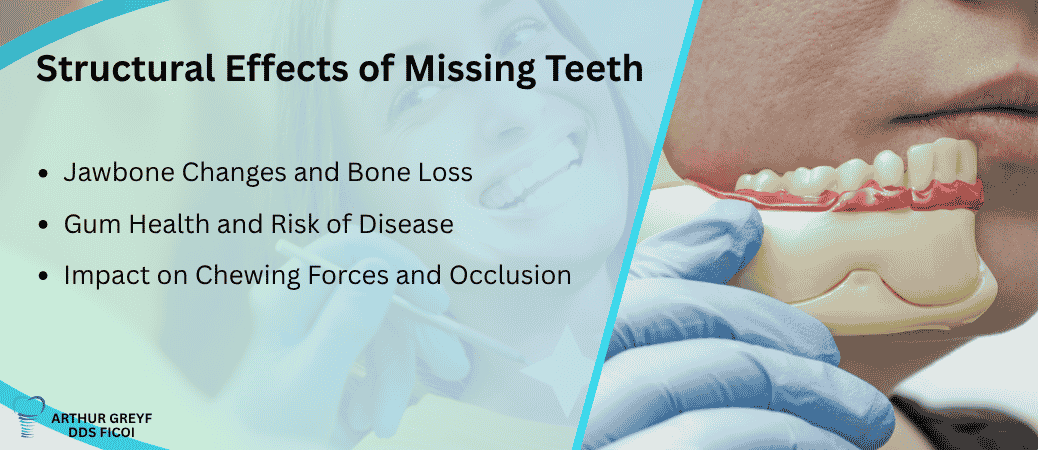
Jawbone Changes and Bone Loss
Your jawbone needs regular stimulation to stay strong. Each time you chew, the roots of your teeth send pressure signals through the bone.
This activity tells your body to keep rebuilding and maintaining that bone support.
Without a tooth root in place, that stimulation stops. Your body starts to resorb the bone in that area because it thinks the bone isn’t needed anymore.
Studies show you can lose up to 25% of bone width in the first year after tooth loss.
The bone loss continues over time and affects more than just one spot. The surrounding bone can also start to shrink.
This makes it harder to place dental implants later if you wait too long. Implants rely on osseointegration, which is when the implant fuses with your jawbone to create a stable foundation.
Gum Health and Risk of Disease
Your gum health becomes more at risk after you lose a tooth. The gap creates new spaces where food particles and bacteria can collect.
These areas are harder to clean with regular brushing and flossing.
Plaque builds up more easily around the teeth next to the gap. This increases your chances of developing gum disease in those areas.
If the gums start to recede or become inflamed, the teeth nearby can become loose or damaged.
The bone loss underneath also affects the gum tissue above it. As the bone shrinks, the gums follow.
This can expose more of the tooth roots on adjacent teeth and make them more sensitive.
Impact on Chewing Forces and Occlusion
Chewing forces spread evenly across your teeth when your mouth is complete. When you lose a tooth, that balance changes immediately.
The remaining teeth have to handle more pressure during eating.
Your bite alignment, or occlusion, starts to shift. The tooth opposite the gap may begin to move up or down because it no longer has anything to press against.
Teeth on either side of the space can tilt or drift inward.
These changes affect how well you can chew your food. You might start favoring one side of your mouth, which puts even more uneven pressure on those teeth.
This can lead to jaw pain, worn enamel, or cracks in your remaining teeth over time.
Common Problems Caused by Shifting Teeth
When teeth shift into gaps left by tooth loss, you face several oral health challenges that affect both function and appearance.
These changes can disrupt your bite, make eating difficult, and create spaces where food gets trapped.
Altered Bite Alignment
Your teeth work together to create proper bite alignment, but when neighboring teeth drift into empty spaces, this balance gets disrupted.
The teeth next to the gap tilt or move toward the opening, which changes how your upper and lower teeth meet when you close your mouth.
These bite changes can cause uneven pressure on certain teeth when you chew. You might notice that some teeth hit harder than others or that your jaw feels strained.
Over time, this uneven distribution of force can wear down specific teeth faster than normal.
Misalignment from tooth drifting can also lead to jaw pain and headaches.
Your jaw muscles have to work harder to compensate for the shifted positions, which creates tension and discomfort.
Food Retention and Decay Risks
Shifted teeth create new gaps and tight spaces where food particles get stuck easily.
Food trapping becomes a daily problem because your toothbrush and floss can’t reach these areas as effectively as they could before the shift.
When food stays trapped between teeth, bacteria feed on it and produce acids that attack your enamel. This increases your risk of cavities in areas that were previously healthy.
The gaps also make it harder to keep your gums clean, which can lead to inflammation and gum disease.
You might find yourself constantly using toothpicks or struggling during meals because food gets wedged in uncomfortable spots.
These food retention issues make eating less enjoyable and require extra cleaning effort after every meal.
Aesthetic and Functional Issues
Shifting teeth change the appearance of your smile in noticeable ways. Gaps may become wider or teeth may look crooked where they were once straight.
Your front teeth might start to overlap or spread apart, affecting how confident you feel when you smile.
Difficulty chewing becomes a real concern as your teeth move out of position. You may favor one side of your mouth over the other, which can make eating certain foods challenging.
Uneven chewing puts extra stress on some teeth while others aren’t used properly.
Speech can also be affected when teeth shift significantly. You might notice slight changes in how you pronounce certain sounds, especially those that require your tongue to touch your teeth.
Tooth Replacement Options to Prevent Shifting
You have several ways to replace a missing tooth and stop nearby teeth from drifting.
Bridges, dentures, and implants each work differently to fill the gap and protect your bite.
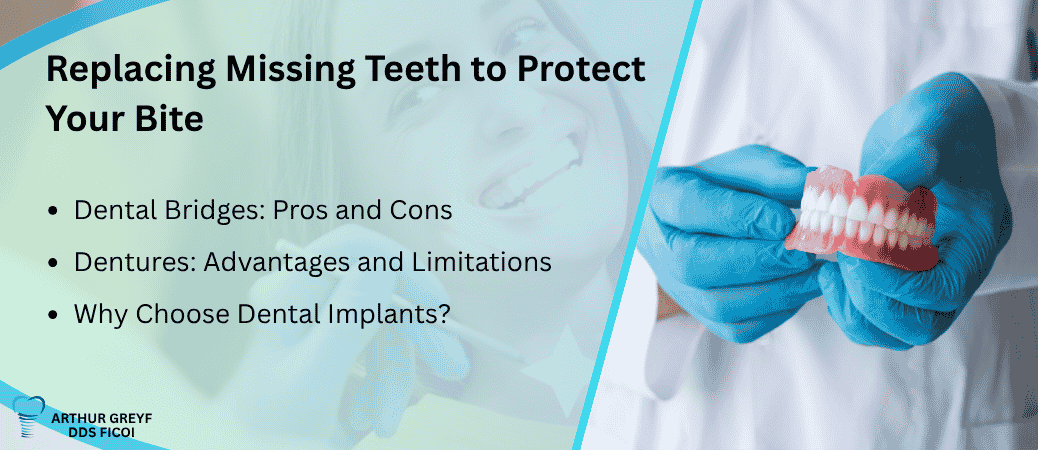
Dental Bridges: Pros and Cons
A dental bridge uses the teeth on either side of the gap as anchors.
Your dentist shapes those neighboring teeth and places crowns on them to hold a false tooth in between.
Bridges restore your ability to chew and speak normally. They also keep adjacent teeth from tilting into the empty space by filling the gap right away.
Advantages:
- Placed in just two visits
- Less expensive than implants upfront
- No surgery needed
Limitations:
- Requires grinding down healthy teeth
- Doesn’t stop bone loss under the gap
- May need replacement every 5 to 15 years
- Can trap food under the false tooth
Bridges work well if you want a quick fix, but they don’t preserve jawbone like implants do.
Dentures: Advantages and Limitations
Dentures are removable appliances that replace missing teeth. Partial dentures clip onto remaining teeth, while full dentures replace an entire arch.
They restore your smile and make eating easier. Partial dentures can help prevent shifting by filling gaps, though they don’t anchor as firmly as bridges or implants.
Benefits:
- Most affordable option to replace missing teeth
- No surgery required
- Easy to adjust if you lose more teeth
Drawbacks:
- May slip when eating or talking
- Need removal for cleaning each night
- Don’t prevent bone loss
- Can feel bulky or uncomfortable at first
Dentures solve immediate functional problems but won’t stop the alteration of adjacent teeth as effectively as fixed options.
Why Choose Dental Implants?
Dental implants provide secure support by replacing both the root and crown of your missing tooth.
A titanium post goes into your jawbone and fuses with it over several months.
Implants are the only option that stops bone loss. The post stimulates your jawbone just like a natural root does.
This keeps the ridge from shrinking and prevents neighboring teeth from drifting into the space.
Key advantages of dental implants:
- Act like natural teeth when you bite and chew
- Last 20+ years with proper care
- Don’t require shaping healthy teeth
- Preserve jawbone density
- Feel and function like your own teeth
The main tradeoff is cost and time. Implants need surgery and several months to heal, but they offer the most complete solution to replace a missing tooth and protect your remaining teeth from shifting.
Dental Implants: The Gold Standard for Stability
Dental implants use a titanium post that fuses with your jawbone through osseointegration, creating a stable foundation that mimics natural tooth roots.
This process preserves bone density and maintains proper alignment while preventing the shifting problems that occur with tooth loss.
How Dental Implants Work
A dental implant consists of three main parts that work together to replace your missing tooth. The titanium post acts as an artificial root that gets placed directly into your jawbone.
An abutment connects to the top of this post, and a custom crown sits on top to complete the restoration.
The key to implant success is osseointegration. This is when your jawbone grows around and bonds with the titanium post over several months.
The fusion creates a strong connection that can handle normal chewing forces just like a natural tooth root would.
Unlike bridges or dentures that sit on top of your gums, implants become part of your jaw structure.
This integration means they won’t slip or move when you eat or speak. The titanium material is biocompatible, so your body accepts it without rejection.
The Dental Implant Procedure Explained
Your dentist will first examine your jaw to ensure you have enough bone to support an implant. If bone loss has already occurred, you may need bone grafting before the implant placement.
This procedure adds material to strengthen and rebuild your jawbone.
The dental implant procedure typically happens in stages. During the first surgery, your dentist places the titanium post into your jawbone under local anesthesia.
Your gum tissue is then stitched closed over the implant site.
The healing period usually takes three to six months. During this time, osseointegration occurs as your bone fuses with the implant.
Once healing is complete, your dentist attaches the abutment and places your custom crown.
Preventing Bone Loss and Maintaining Alignment
Dental implants help prevent bone loss by stimulating your jawbone when you chew. Natural teeth transmit chewing forces through their roots into the surrounding bone.
This stimulation signals your body to maintain bone density in that area.
When you lose a tooth, that stimulation stops. Your body begins to resorb the bone because it’s no longer needed.
Implants restore this crucial function by transferring chewing forces into your jaw just like natural roots do.
Bone grafting procedures can stabilize your jawbone and maintain its density after tooth loss. This preserved bone structure keeps your remaining teeth from drifting into empty spaces.
Your proper bite alignment stays intact, which protects you from jaw pain and uneven wear.
Do Implants Affect Surrounding Teeth?
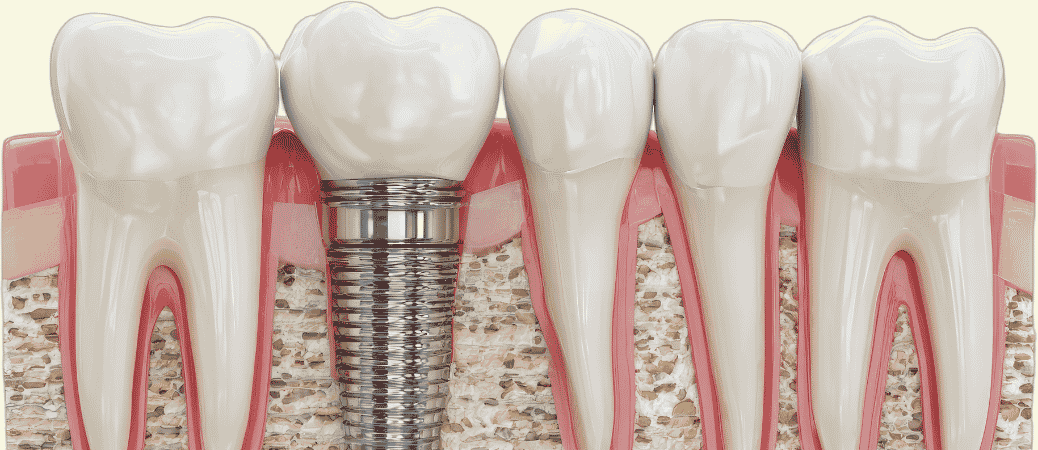
Dental implants provide secure support that stops adjacent teeth from shifting out of position.
The implant fills the gap left by your missing tooth, maintaining the spacing that keeps your other teeth properly aligned.
This preservation of your dental arch prevents the domino effect of tooth movement.
Your surrounding teeth benefit from having a stable neighbor. The implant shares chewing forces across your jaw, reducing stress on adjacent teeth.
This balanced distribution helps protect your natural teeth from excessive wear or damage.
Implants don’t require grinding down healthy teeth like bridges do. Your natural teeth stay intact and unmodified.
The self-supporting nature of implants means they don’t depend on neighboring teeth for stability.
Frequently Asked Questions
When you lose a tooth, the empty space creates changes that affect your whole mouth.
These questions cover what happens to nearby teeth and how implants can protect your smile.
Why do nearby teeth start drifting after a tooth is missing?
Your teeth stay in place because they push against each other. When you lose a tooth, the teeth next to the gap no longer have that support on one side.
The natural forces from chewing and your bite start pushing teeth into the empty space.
Adjacent teeth may gradually drift or tilt because there’s nothing holding them in position anymore.
The tooth above or below the gap can also move. It might start to grow down or up into the space since it doesn’t have an opposing tooth to bite against.
How quickly can adjacent teeth shift after tooth loss?
Teeth can start moving within a few weeks after you lose a tooth. The speed depends on your age, bone density, and which tooth you lost.
Some people notice changes in just a few months. Others might not see obvious shifting for a year or more.
Younger people often experience faster tooth movement because their bone is more active. The teeth next to molars tend to shift quicker than teeth near the front of your mouth.
What problems can tooth shifting cause for my bite and jaw?
When teeth move out of alignment, they don’t fit together properly when you bite down. This creates uneven pressure on your jaw joints and remaining teeth.
You might develop pain in your jaw or experience headaches. Shifting can lead to bite issues, misalignment, and even further tooth loss.
Crooked or tilted teeth are harder to clean. Food gets trapped more easily, which increases your risk of cavities and gum disease.
Can losing one tooth make my other teeth feel loose or crowded over time?
Yes, losing just one tooth can affect your entire mouth over time. As teeth drift into the gap, they pull away from their original neighbors.
This creates new spaces between other teeth that weren’t there before. Your teeth might feel looser because they’ve lost some of the support from adjacent teeth.
The shifting can make some areas feel crowded while creating gaps in other spots. Your bite changes as teeth tilt at odd angles instead of standing straight.
How do dental implants help keep surrounding teeth in their proper positions?
A dental implant fills the empty space where your tooth used to be. This gives the teeth on either side something to rest against, just like a natural tooth would.
The implant acts as a stable anchor that prevents neighboring teeth from drifting. It maintains the proper spacing in your arch so teeth stay aligned.
Unlike bridges, dental implants don’t require altering adjacent teeth. They stand on their own and provide independent support.
Will an implant stop bone loss and reduce future tooth movement?
Dental implants do more than just fill space. They stimulate your jawbone when you chew, similar to how natural tooth roots work.
The forces transmitted through the implant encourage bone regeneration and prevent the bone loss that normally happens after tooth extraction. When your bone stays strong, it holds all your teeth more securely.
Without bone stimulation, your jaw can shrink over time. This makes remaining teeth less stable and more likely to shift or become loose.