


Why Denture Adhesives Stop Working for Some Patients Over Time
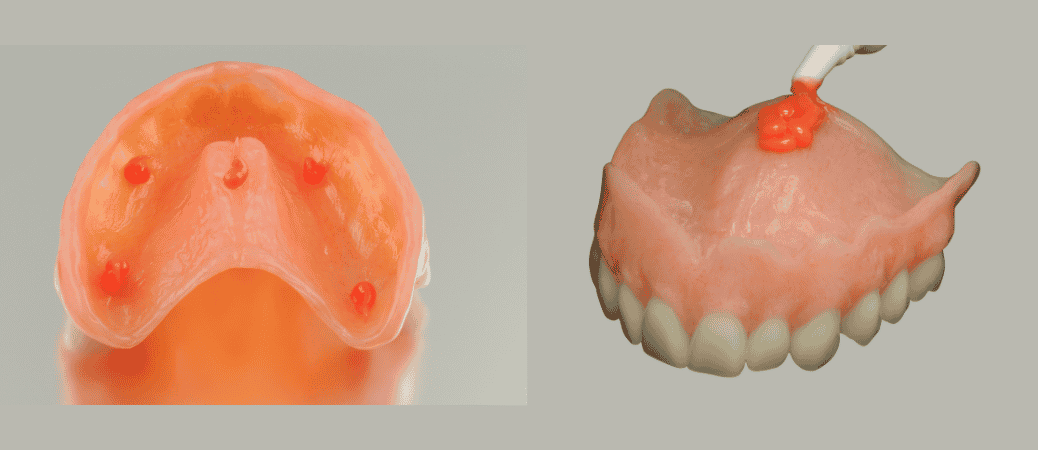
Basics of implants — strong, natural tooth restoration with a metal post.
If your denture adhesive used to hold strong all day and now gives out before lunch, you may be dealing with denture adhesive problems caused by changes in how your dentures fit.
This is one of the most common concerns we hear from patients, and it almost always points to a change in denture fit rather than a weaker tube of cream.
Your gums and jawbone shift shape over the years, and even a small gap between the denture base and your gum tissue can be enough to make dentures slipping a daily worry.
The good news is that this problem has clear causes and real solutions.
Adhesive failure is usually a sign your denture fit has changed, not proof that you need a stronger adhesive.
Once you understand why this happens, you can work with your dental team to find a fix that actually lasts, instead of reapplying adhesive throughout the day and hoping it holds.
Key Takeaways
- Denture adhesive failure is usually caused by changes in your gums and jawbone, not a weak product.
- Warning signs like frequent reapplication, sore spots, and clicking mean it’s time for a professional fit check.
- Options range from a simple reline to implant-supported dentures, depending on what your mouth needs.
Table of Content
- The Gap Adhesive Cannot Bridge
- How Changes in Your Mouth Undermine Denture Fit
- Signs Your Dentures Need Professional Attention
- What Can Restore a More Secure Fit?
- A Current Fit Is Safer Than More Adhesive
- Conclusion
- Frequently Asked Questions
The Gap Adhesive Cannot Bridge
Denture adhesives are built to fill tiny spaces and boost suction, not to hold a denture that no longer matches the shape of your mouth.
When the gap between your denture and your gum tissue grows too wide, no amount of paste or powder can close it safely.
How Denture Adhesives Are Designed to Help
Denture adhesives work by creating a thin, sticky layer that fills microscopic gaps and improves the seal between your denture and your gum ridge.
This boosts denture stability during normal use, like eating soft foods or talking with friends.
Research measuring retentive force found that cream-type adhesives hold up well over time compared to moisturizing gels, which lose grip faster as they absorb water.
That is why adhesive can feel dependable for months or even years before problems start.
Why a Larger Gap Defeats Even Strong Adhesives
Adhesive was never meant to fill a large space. As your gum ridge changes shape, the gap between your denture and your gum grows wider each year, and adhesive cream sitting on top of that gap simply cannot bridge it.
This is why you might find yourself reapplying by noon no matter which brand you buy. A poor denture fit needs a fitting correction, not a thicker layer of glue.
When Adhesive Use Is Reasonable and When It Is a Warning Sign
Using adhesive occasionally, for extra confidence during a big event or a meal with tough foods, is perfectly reasonable.
It becomes a warning sign when you need more adhesive than the package directs, or you are reapplying multiple times a day just to get through normal activities.
If you are using more adhesive than directed or relying on it several times a day, talk to your dentist rather than continuing to increase the amount.
How Changes in Your Mouth Undermine Denture Fit
Your mouth keeps changing years after you get dentures, and that ongoing change is the real reason a once-perfect fit stops working.
Bone loss, gum changes, weight shifts, and dry mouth all reshape the foundation your denture rests on.
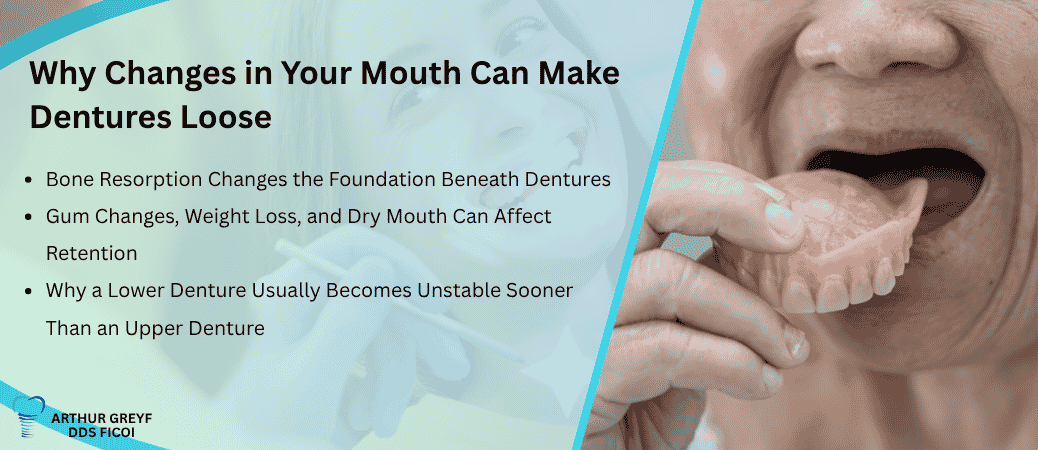
Bone Resorption Changes the Foundation Beneath Dentures
Bone resorption means your jawbone gradually shrinks after teeth are lost, since the bone no longer gets the stimulation it needs from tooth roots.
This is the single biggest reason unstable dentures develop over time, and it happens gradually enough that many patients do not notice until adhesive stops working.
A bone assessment during a denture checkup can show your dentist exactly how much of this change has occurred and guide the right fix.
If you’re noticing ongoing shifts in your bite or spacing, it helps to understand more about bone loss and its effects on tooth position.
Gum Changes, Weight Loss, and Dry Mouth Can Affect Retention
Your gum tissue also changes shape over the years, becoming thinner or shrinking in ways that affect how your denture sits.
Weight loss can shrink the soft tissue padding your gums rely on, loosening a denture that once fit snugly.
Dry mouth, often a side effect of common medications, reduces the natural moisture that helps create suction, which is part of why denture adhesives made for dry mouth exist as a separate product category.
Why a Lower Denture Usually Becomes Unstable Sooner Than an Upper Denture
A lower denture typically loses stability faster than an upper denture because it has a smaller surface area to rest on and less natural suction to rely on.
The upper jaw offers a broader palate that helps a full denture stay seated, while the lower ridge is narrow and shrinks unevenly with bone resorption.
This is a normal pattern many denture wearers notice, and it is one reason lower dentures often need adjustment or implant support sooner than their upper counterpart.
Signs Your Dentures Need Professional Attention
Frequent slipping, clicking sounds, or food trapped under your denture are your mouth’s way of telling you the fit has changed.
These signs are common, and they are also your cue to schedule a checkup rather than wait things out.
Slipping, Clicking, and Food Trapping
Denture slipping during meals or conversation usually means the base no longer follows the contour of your gum ridge closely enough.
Clicking noises often happen when a denture rocks slightly with each bite, and food trapping underneath is a sign that a gap has opened up where suction used to hold firm.
If you are noticing these issues regularly, it is worth reading more about common problems with loose dentures and what typically causes them.
Sore Spots and Changes in Chewing or Speech
Sore spots develop when a poor denture fit puts uneven pressure on certain areas of your gum every time you bite down.
You might also notice new difficulty pronouncing certain words or chewing foods that used to be easy, both signs that your denture is not seating the way it should.
Why Reapplying Adhesive More Often Is Not a Long-Term Fix
Reaching for adhesive more often only masks a fit problem instead of solving it.
Increased adhesive dependence is a well-recognized signal that the denture itself needs professional attention, not a stronger hold product.
Left unaddressed, ongoing looseness can also lead to irritated gum tissue, which makes future adjustments more uncomfortable.
What Can Restore a More Secure Fit?
A denture reline, new dentures, or implant-supported options can each restore a secure fit, and the right choice depends on how much your mouth has changed since your last fitting.
When a Denture Reline May Be Enough
A denture reline adds new material to the base of your existing denture so it matches your current gum shape again.
This works well when your bone loss is mild to moderate and the denture’s teeth and overall structure are still in good condition.
It is often the fastest and most affordable way to fix a poor denture fit without starting over.
Soft Reline vs. Hard Reline: What Is the Difference?
A soft reline uses a cushioned material that flexes slightly, which helps patients with sensitive or thin gum tissue.
A hard reline uses a firmer acrylic material that lasts longer and works well for patients whose gums are healthy but whose bone has changed shape.
| Feature | Soft Reline | Hard Reline |
| Material feel | Cushioned, flexible | Firm, rigid |
| Best for | Sensitive or thin gums | Healthy, stable gum tissue |
| Typical lifespan | Shorter | Longer |
| Comfort adjustment | Faster | May need a short adjustment period |
When New Dentures or Repairs Make New Sense
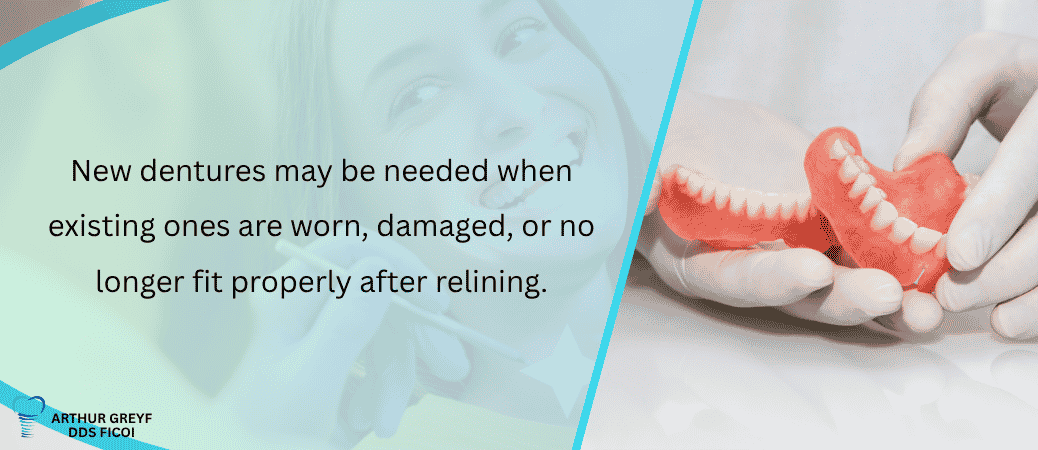
New dentures make more sense when the existing set is worn, cracked, or too far out of shape for a reline to correct.
If your bone has changed significantly since your last denture, a fresh set built to your current gum contours will fit and function far better than repeated relines.
Choosing between reline and replacement is easier with guidance on choosing the right dentures for your situation.
How Implant Overdentures and Full-Arch Implants Improve Stability
An implant overdenture snaps onto two or more dental implants placed in your jaw, giving your denture a stable anchor instead of relying on suction and adhesive alone.
Full-arch options like All-on-4 or All-on-6 use four or six implants to support an entire arch of replacement teeth, and the implants themselves help preserve the jawbone in areas where they are placed.
When bone loss is significant, a bone graft may be recommended first to build up the ridge before implants are placed.
Not every patient is a candidate for implants right away, which is why a complete dental evaluation matters before deciding on this path.
You can learn more about implant-support arches and how they compare to traditional dentures.
A Current Fit Is Safer Than More Adhesive
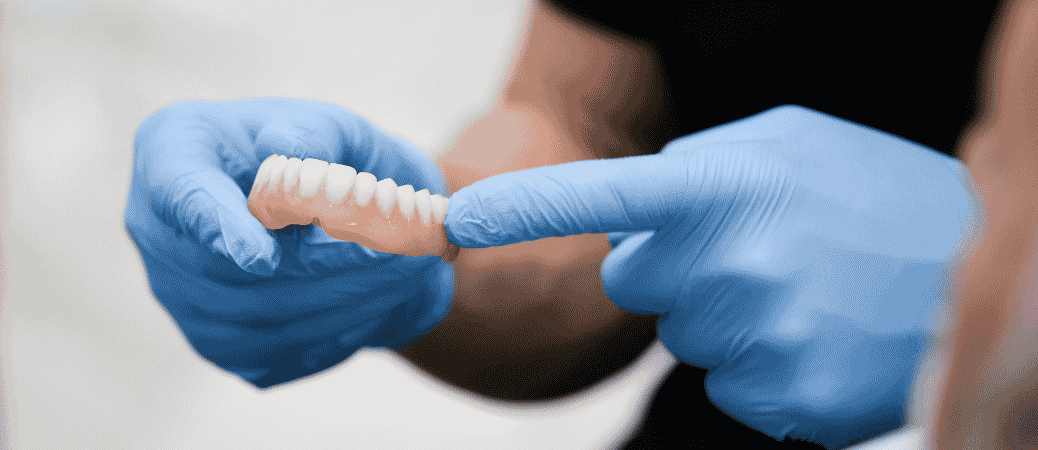
A professional denture evaluation can identify changes in your bone, gums, and denture fit and help determine whether a reline, new denture, or implant-supported option may be appropriate.
A professional denture evaluation can identify changes in your bone, gums, and denture fit and help determine whether a reline, new denture, or implant-supported option may be appropriate.
If your adhesive routine has grown from occasional to daily, that shift alone is worth bringing up at your next visit.
Regular checkups, even when your denture still feels mostly fine, catch these fit changes early, before sore spots or major slipping start affecting your daily life.
At Arthur Greyf DDS, your denture fit can be evaluated based on your current oral health, comfort, and stability so you can understand which options may work for your needs.
Conclusion
Denture adhesive failing more often almost always points back to changes in your gums and jawbone, not a weaker product.
Bone resorption, gum tissue changes, weight loss, and dry mouth all reshape the foundation your denture depends on, and adhesive was never designed to fill a large or growing gap.
Paying attention to slipping, soreness, and how often you reach for adhesive helps you catch a fit problem early.
From a simple reline to an implant-supported denture, real solutions exist for restoring stability, and a professional exam is the clearest way to find out which one fits your mouth today.
Frequently Asked Questions
Why doesn’t my denture adhesive work anymore?
Denture adhesive usually stops working because the fit of your denture has changed, not because the product got weaker.
Bone resorption and gum tissue changes create a gap between your denture and your gum ridge that adhesive cannot bridge on its own.
A fit evaluation can confirm what has changed and what to do next.
Can I use more denture adhesive if my dentures are loose?
Adding more denture adhesive can mask a fit problem temporarily, but it does not fix the underlying cause of loose dentures.
Using more adhesive than the package recommends is a known warning sign that your denture needs professional attention.
It’s best to schedule a fit check rather than keep increasing the amount you use.
What are the side effects of using denture adhesive every day?
Daily denture adhesive use can lead to residue buildup on your gums, which may contribute to bacterial growth and gum irritation over time.
Some adhesives are difficult to fully clean from oral tissue, which can affect gum health with regular heavy use.
If you’re using adhesive daily just to get through meals, that pattern is worth discussing with your dentist.
How do I know if my dentures need to be adjusted?
Frequent slipping, clicking, sore spots, food getting underneath the denture, or needing more adhesive than before can indicate that the fit has changed.
A dental evaluation can determine whether an adjustment, reline, or replacement may help.
Will a denture reline stop my dentures from slipping?
A denture reline can stop slipping when the main issue is a gap between your denture base and your current gum shape.
It works well for mild to moderate bone changes, though it may not be enough if your bone loss is more advanced.
A dental evaluation can help determine whether a reline is appropriate for your specific denture fit problem.
Are implant-retained dentures better than using adhesive?
Implant-retained dentures, like an implant overdenture, offer more stability than adhesive alone because they anchor directly to implants placed in your jawbone.
They are not automatically the right choice for every patient, since bone volume and overall health both factor into candidacy.
A dental evaluation, including a bone assessment, helps determine whether implants make sense for your situation.